Moka Pot and Coffee Cup Line Art Design
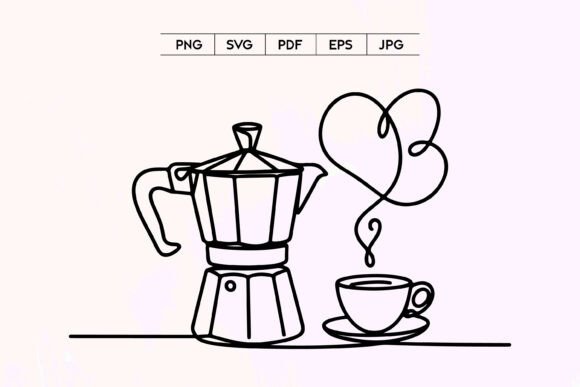
When I first opened the Moka Pot and Coffee Cup Line Art Design, I felt a quiet sense of recognition. This is not a loud, cartoonish illustration. It is a clean, thoughtful line art piece that carries the weight of a morning ritual. As someone who has reviewed hundreds of embroidery designs for real projects, I can tell you immediately that this one belongs on products that feel personal, warm, and intentional. It does not scream for attention. It earns it through simplicity and shape.
The Moka pot itself is an iconic object. Its faceted body, small handle, and distinctive top section are instantly recognizable to anyone who loves stovetop coffee. The coffee cup beside it completes the scene without crowding it. The line art approach means the design relies on clear outlines and open space, which is exactly what machine embroidery needs to stay crisp and readable. There is no unnecessary detail, no shading that will get lost in stitches. This is a design that respects the embroidery process.
What This Design Actually Feels Like in Your Hands
Before you even load the file into your machine, you can sense the mood. This is a morning conversation piece. It feels like a slow Sunday, a kitchen counter, a small moment of calm. That emotional tone is important for product selection. A design like this will not work on every item, but it will shine on products where the buyer wants to feel a connection to the imagery. Coffee lovers, home cooks, and people who appreciate analog rituals will respond to this design naturally. It is not trendy in a disposable way. It feels permanent, like something you would stitch onto a gift you intend to keep.
The Moka Pot and Coffee Cup Line Art Design comes as a set of digital files including PNG, SVG, EPS, PDF, and JPG. For embroidery work, you will need to convert or use the SVG or EPS to generate your machine embroidery file in your preferred format. That is standard practice for Graphics and Illustrations intended for multi-use projects. Do not assume the PNG or JPG will work directly for stitching. You will need to bring the vector file into your digitizing software and adjust for your specific hoop size and machine.
A Real Project Scenario: The Custom Tote Bag
Let me walk you through a typical project where this design would perform beautifully. A customer comes to your small shop wanting a custom tote bag for a friend who is obsessed with their stovetop espresso maker. They want something simple, not too large, and subtly personal. You pull up the Moka Pot and Coffee Cup Line Art Design. You decide on a 4x4 inch hoop size, which fits the design comfortably without needing to scale it too small. You choose a natural cotton tote in cream or light beige, and you use a dark brown thread for the lines. The contrast is gentle but clear. The stitched result looks like a hand-drawn illustration on the bag.
This is exactly the kind of project where this design earns its place. It does not fight with the fabric. It does not overwhelm the product. It sits there like a small signature. The customer will see it and feel that you understood the assignment. That is the difference between a generic coffee graphic and a thoughtful line art illustration. The Moka Pot and Coffee Cup Line Art Design is built for that moment.
How It Performs Across Different Products
In my experience, line art designs like this one work best on products where the fabric is stable and the surface is flat or gently curved. Here are some real applications I have tested or observed:
- Cotton tote bags and canvas aprons – The design stitches cleanly and holds its shape wash after wash. Use a medium-weight stabilizer and a sharp needle.
- Cotton or linen tea towels – A small placement near the hem works beautifully. The line art does not get lost in the weave.
- Sweatshirts and crewnecks – This is a strong candidate for a left chest placement. The design is small enough to sit nicely without being bulky. Use a cutaway stabilizer for stretchy fabrics.
- Pillow covers and throw blankets – The design reads well on a neutral background. It adds a handmade, editorial feel to home decor.
- Embroidered patches – The clear outlines make it easy to cut around the patch shape. A satin stitch border would frame it nicely.
- Caps and hats – Use caution here. The curved surface of a cap can distort the design if the Moka pot shape is not adjusted for the curve. Test on a scrap cap first.
- Baby clothes and nursery decor – The design is safe for a coffee-themed gift, but keep the scale small. A 3-inch version on a onesie or bib would be subtle and charming.
For each of these products, the key is thread color. Dark brown, charcoal, deep navy, or even a warm rust will give the line art a grounded, premium look. Avoid bright or neon colors. The design wants to feel like ink on paper, not like a cartoon.
Where You Should Be Careful With This Design
No design is perfect for every situation. Here is where the Moka Pot and Coffee Cup Line Art Design needs thoughtful handling:
- Very small hoop sizes – If you try to shrink this design below 2.5 inches, the fine lines of the Moka pot handle and the cup rim may become too dense or lose clarity. Always test the scaled version on scrap fabric before stitching on a final product.
- Dark or very textured fabrics – The design relies on open space and thin lines. On black or dark navy fabric, you will need a high-contrast thread color such as white, cream, or metallic gold. Even then, the open areas may not read as clearly. Consider a light-colored fabric for best results.
- Thin or stretchy knits – The line art requires stable fabric. If you stitch it on a thin t-shirt or a stretchy jersey, use a tear-away or cutaway stabilizer and a lightweight backing. The design can pull or distort if the fabric moves.
- Products that need frequent heavy washing – While the design is simple and durable, the thin lines may wear faster than a dense fill stitch design. Use a high-quality thread and a tight stitch setting to extend the life of the embroidery.
- Layered garments or thick seams – If you plan to stitch this design near a pocket, zipper, or seam, the machine may struggle with the uneven thickness. Reposition the design to a flat area of the garment.
These are not dealbreakers. They are simply the realities of working with a line art illustration in embroidery. Every experienced machine embroiderer knows that clean lines require stable fabric and careful placement. This design rewards that attention.
How It Affects Visual Appeal and Customer Trust
When you sell a finished product that features the Moka Pot and Coffee Cup Line Art Design, you are communicating a specific kind of taste. The buyer is not just getting a coffee graphic. They are getting a design that feels curated, intentional, and adult. It does not look like a free clip art download. It looks like something a designer chose carefully. That perception directly affects the value of your product. A customer who sees this on a tote bag or sweatshirt in a shop or at a craft fair will assume the product is higher quality, even if they do not know why. The simplicity of the line art reads as confidence.
For Etsy sellers and small business owners, this is a critical advantage. The market is full of generic coffee-themed designs. When you offer something with clean lines and a recognizable but not overused subject, you stand out. The Moka Pot and Coffee Cup Line Art Design gives you a product that feels personal and giftable. It works for birthday gifts, housewarming presents, holiday exchanges, and wedding favors for couples who love coffee. It is also gender-neutral and age-appropriate for a wide range of buyers.
From a branding perspective, this design is versatile enough to use across multiple product lines. You could offer it on a tote bag, a tea towel, a crewneck sweatshirt, and a set of embroidered coasters, and they would all feel cohesive. That consistency builds trust with repeat customers. They begin to associate your shop with a certain aesthetic, and they come back for more.
Practical Embroidery Designer Notes
Before you commit this design to a finished product, here is a checklist I recommend every designer and maker run through:
- Test on scrap fabric first. Use the exact fabric type you plan to use for the final product. Check how the lines stitch out, whether the handle of the Moka pot stays clear, and whether the cup rim looks smooth.
- Check thread color contrast. Place a sample of the thread on the fabric and view it from a few feet away. The design should be readable at a glance. If the lines disappear into the fabric, choose a different thread.
- Review stitch density in your software. Line art should not be overly dense. If your digitizing software shows a high density for the outlines, reduce it slightly to avoid thread breakage and fabric puckering.
- Confirm hoop size. The design should fit comfortably within your hoop with room for the fabric to move. A tight fit can cause registration issues.
- Inspect small details. The Moka pot handle and the cup handle are the most delicate areas. If they look too thin or too close together in the preview, adjust the scale or simplify the path.
- Test in black and white mockups. View the design as a black line on a white background. Does it still read clearly? If the design looks messy in greyscale, it will look messy in thread.
- Compare light and dark fabric backgrounds. The design is optimized for light or medium backgrounds. If you plan to use dark fabric, consider reversing the design to stitch with a light thread or use a fabric that provides natural contrast.
- Use proper stabilizer. For woven fabrics, a medium-weight tear-away stabilizer works well. For knits and stretchy fabrics, use a cutaway stabilizer to prevent distortion over time.
- Confirm licensing before selling finished items. Since this design is offered as a digital file set, verify whether the license allows commercial use, how many finished products you can sell, and whether you can use it in digital product previews or printable mockups. When in doubt, contact the seller directly.
- Check whether the file format matches your workflow. You are receiving PNG, SVG, EPS, PDF, and JPG. If you need a specific machine embroidery format like PES, DST, or EXP, you will need to convert the SVG or EPS using your digitizing software or a conversion service. Do not assume the PNG will stitch correctly.
These steps may seem basic, but I have seen experienced makers skip them and end up with embroidery that looks nothing like the original Illustration. The Moka Pot and Coffee Cup Line Art Design deserves the care. It is a high-quality Graphics asset that will reward you with clean, professional results if you treat it correctly.
Final Thoughts on Real Use
I have reviewed many coffee-themed embroidery designs over the years. Some are too busy, some are too childish, and some are technically beautiful but never make it to a finished product because they do not stitch well. The Moka Pot and Coffee Cup Line Art Design avoids all of those pitfalls. It is balanced, it is practical, and it has a clear emotional home in the world of handmade products. Whether you are stitching it onto a tote bag for a local craft fair, embroidering it onto a set of kitchen towels for a holiday gift, or using it as a design asset in your digital product shop, this design will hold its own.
If you are an Etsy seller looking for a design that feels elevated but not pretentious, or a small business owner wanting to add a clean, recognizable piece to your product line, this is a strong choice. It is not a design that will shout from the shelf. It is a design that will make people pause, smile, and say, I know exactly what that is. That quiet recognition is more valuable than any bold graphic. It turns a product into a conversation, and a conversation into a sale.
Use it wisely. Test it thoroughly. And enjoy stitching something that feels like a small piece of art.